
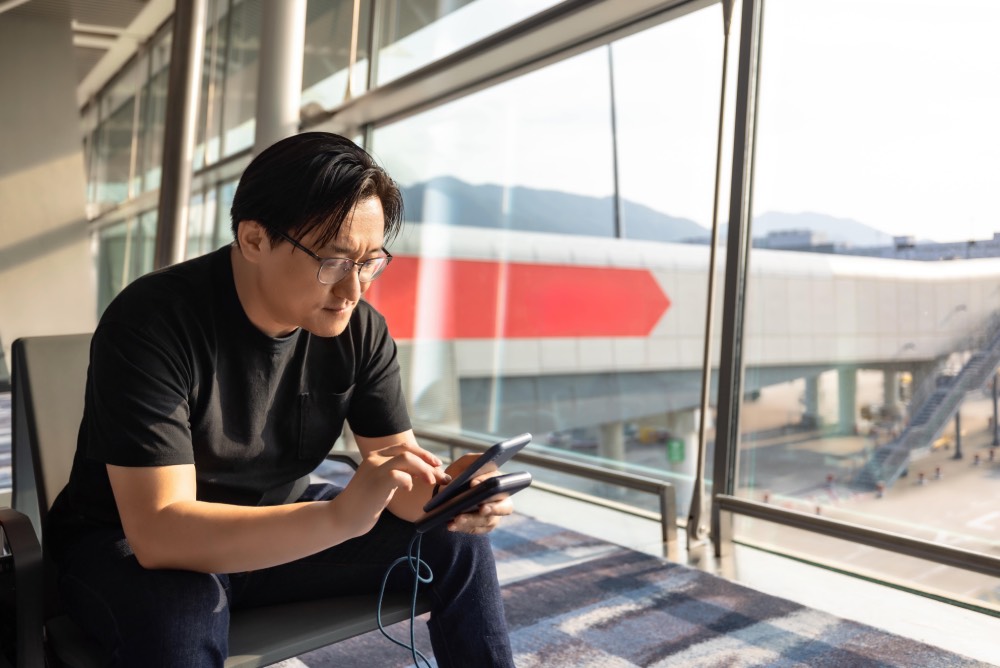
With Middle Eastern carriers spearheading a global transformation in aviation safety standards, FCM Travel is equipping business travellers with safety tips to help them stay connected on the go.
The resource was developed in response to recent airline policies placing restrictions or bans on the use of power banks and portable charging devices during flights. With these safety tips, FCM Travel is urging travellers to stay informed about new requirements and adopt alternative strategies to remain connected in the air.
In August 2025, Emirates became the first major international carrier to implement a complete ban on power bank usage during flights, effective October 1, 2025.
This decision from the Middle East’s largest airline aims to eliminate risks from lithium-ion battery incidents that have plagued the aviation industry, with the Dubai-based carrier citing a significant increase in battery-related incidents across global flights.
“Power banks and portable chargers have become carry-on essentials, especially during long-haul flights,” said Ciaran Kelly, Managing Director, FCM Travel Middle East and Africa.
“We hope these safety tips serve as a valuable resource as airlines begin implementing new policies for these devices. Safety is a top priority, but there are practical tips and strategies business travellers can use to stay connected and charged while on the move.”
The Gulf region’s influence extends beyond Emirates. Etihad Airways, the UAE’s national carrier, strictly prohibits power bank usage onboard while allowing carriage of up to 10 devices per passenger.
Qatar Airways has gone further, banning specific Anker power bank models following manufacturer recalls due to fire hazards. These comprehensive regional policies contrast with more limited restrictions from carriers like Southwest Airlines, which only require power banks to remain visible during use.
Regional carriers across Asia have followed the Middle East’s lead. Singapore Airlines, Thai Airways, and China Airlines have adopted similar restrictions.
At the same time, South Korean airlines now enforce nationwide bans on in-flight charging, following a January 2025 Air Busan incident.
Starting in October, Emirates, the largest airline in the Middle East, will also implement a new policy banning the use of power banks during flights. Passengers will be required to store switched-off power banks in the seat pocket or under the seat in front of them.
As airlines continue to update their on-board battery policies, the tips below offer actionable advice for staying charged when flying.
Safety guidelines: Tips to stay connected and charged in-flight
- Understand the policy – Check your airline’s specific policy before you travel. Rules vary by carrier and are subject to change. Review them on the airline’s official website.
- Board with a full charge – Begin your journey with fully charged devices. If you use them at the airport, take advantage of charging points in lounges or restaurants before boarding.
- Pack a charging lead – Carry a USB-compatible charging lead in your hand luggage. Many aircraft now offer USB charging ports, particularly on long-haul routes.
- Prioritise a tablet – If you need a device for work or entertainment, consider using a tablet instead of a laptop. Tablets are easier to charge via on-board USB ports.
- Use in-flight entertainment – Where available, opt for the aircraft’s entertainment system to help preserve your own device’s battery.
- Be mindful of public USB ports – particularly in airports – as they may be vulnerable to cyber threats. Before boarding, use a wall socket with your own charger or a portable battery pack wherever possible.
- Choose reputable brands – Only travel with certified power banks from trusted manufacturers to minimise safety risks.
- Keep chargers in the cabin – Always carry your portable charger in your hand luggage. Never pack power banks in checked baggage, as this is prohibited by most airlines.