
By Damini Grover
Spend a few minutes on social media and you’ll see it everywhere. Millennials being called obsessed with hustle while Gen Z being labelled as too sensitive or unwilling to work hard. It sounds funny on the surface… but honestly, there’s a deeper misunderstanding underneath. While these two generations aren’t that far apart in age but emotionally, they often feel worlds apart.
Millennials grew up in a very different time. They remember life before smartphones, Ai and before everything was online all the time. Many of them entered adulthood during the 2008 recession, when jobs were scarce and stability felt uncertain. So, the message they absorbed was pretty clear- work hard, stay loyal, prove yourself and eventually things will fall into place. Therefore, pushing through became their second nature.
Gen Z, on the other hand, has grown up in a completely different environment; amidst constant connectivity, global crises playing out in real time, a pandemic during key years of growing up and so on. There’s been a lot of uncertainty, but very visible, very immediate. So instead of just dealing with it quietly, they’ve grown up talking about it and that’s where one of the biggest differences shows up-mental health.
For millennials, mental health wasn’t really a conversation. You felt anxious? You called it stress. You felt low? You told yourself it’ll pass and therapy wasn’t something people openly considered. In fact, most of them didn’t even know much about it. So, a lot of them just learned to function despite what they were feeling.
Gen Z, though, is different. They talk about therapy, burnout, boundaries, triggers etc and they do it quite openly. They don’t see mental health as separate from work or success. It’s all connected. Now, this doesn’t mean one is stronger and the other is weaker or that one is superior that the other. Not at all. It’s really about context.The thing is that millennials didn’t always have the language or permission to express what they were feeling. Gen Z does so naturally, they use it.But when these two ways of being come together, especially at work or in relationships, there can be friction.A millennial might say, “Just push through, it’ll get better” whereas a Gen Z person might hear that as “Your mental health doesn’t matter.”
A Gen Z person might set a boundary and a millennial might feel, “Why are you giving up so easily?” and honestly both are reacting from their own lived experiences.
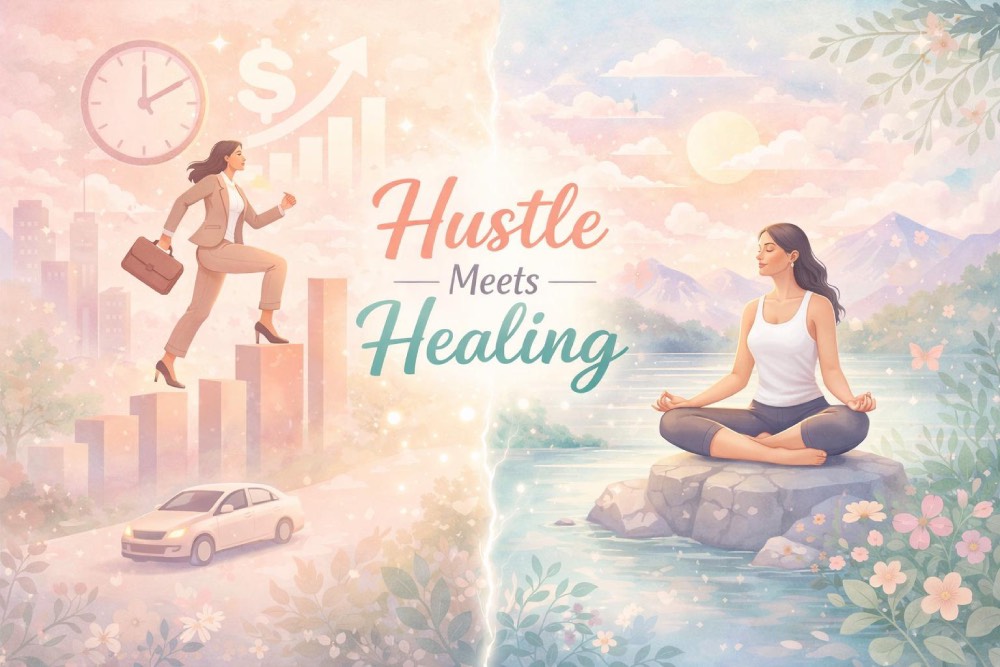
The truth is, both generations adapted to what they went through. Millennials built resilience through endurance while Gen Z built self-protection through boundaries and neither is wrong.However,the problem starts when we get rigid about it because yes, emotional awareness matters. It strengthens resilience and at the same time, not every discomfort is harmful. Sometimes growth does require effort, patience, and showing up even when it’s hard.
So maybe it’s not about choosing one way over the other.It’s about integrating both.We need emotional awareness and resilience,boundaries and flexibility,ambition and rest.
Millennials bring grit, consistency, long-term thinking and Gen Z brings emotional language, clarity around boundaries, and a different kind of awareness and honestly, we need both because generations aren’t competing with each other,they’re just responding to the times they grew up in.Millennials learned to survive by enduring and Gen Z is learning to survive by questioning.
And the future? It’s going to belong to people who can do both- feel deeply, and still show up fully.
That’s the real bridge.
DAMINI GROVER
COUNSELING PSYCHOLOGIST | LIFE COACH | AUTHOR
FOUNDER-I’M POWERED, CENTRE FOR COUNSELING & WELL-BEING